
Landing Page or Website: What Does Your Business Actually Need?
A practical guide to choosing between a landing page and a website based on the offer, user journey, content, lead capture, and maintenance.
- Published
Start with the business job
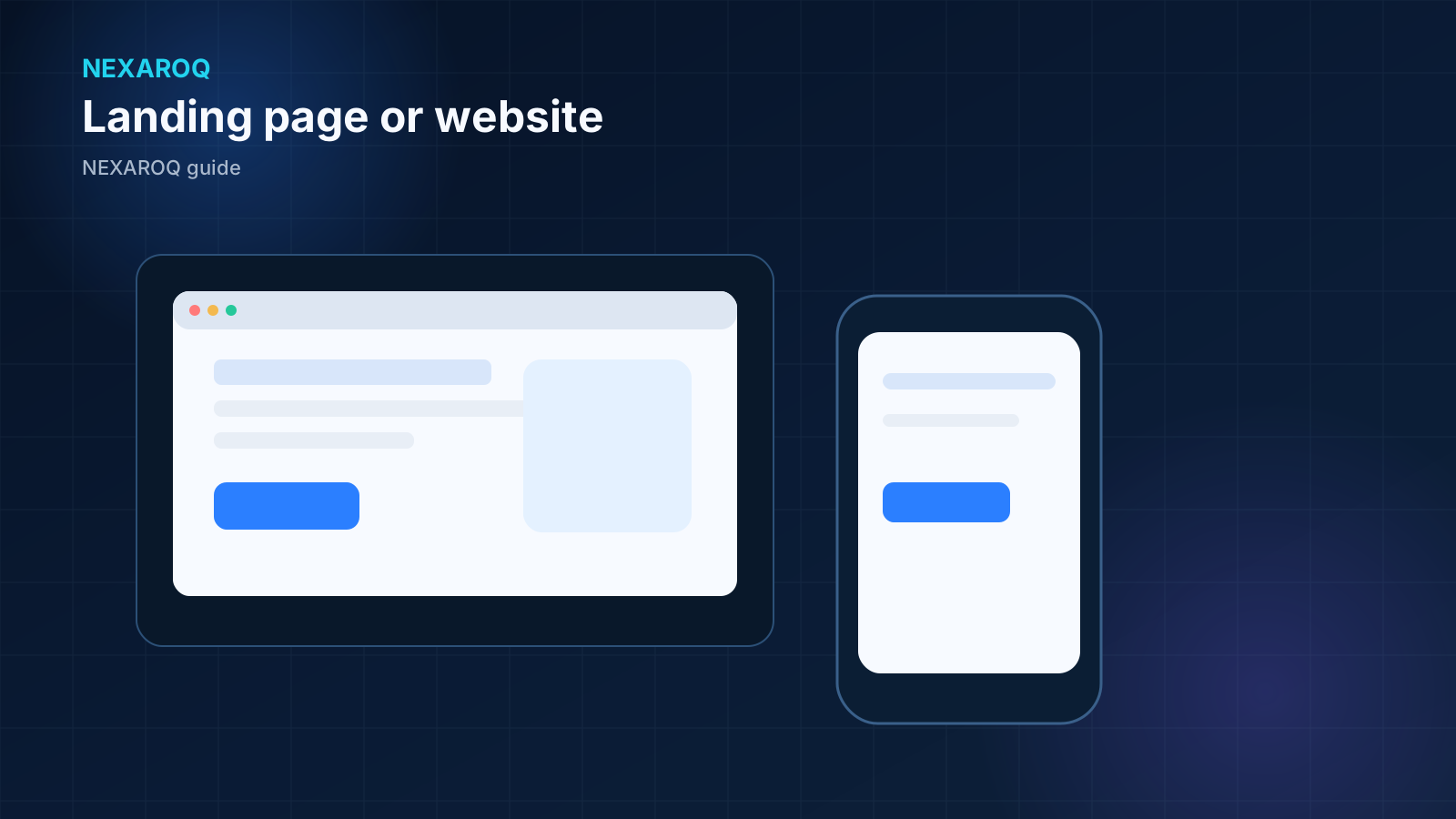
A landing page and a website are not simply small and large versions of the same solution. They organize different journeys. A landing page concentrates attention on one offer or action, while a website lets people explore several capabilities and build context across multiple pages.
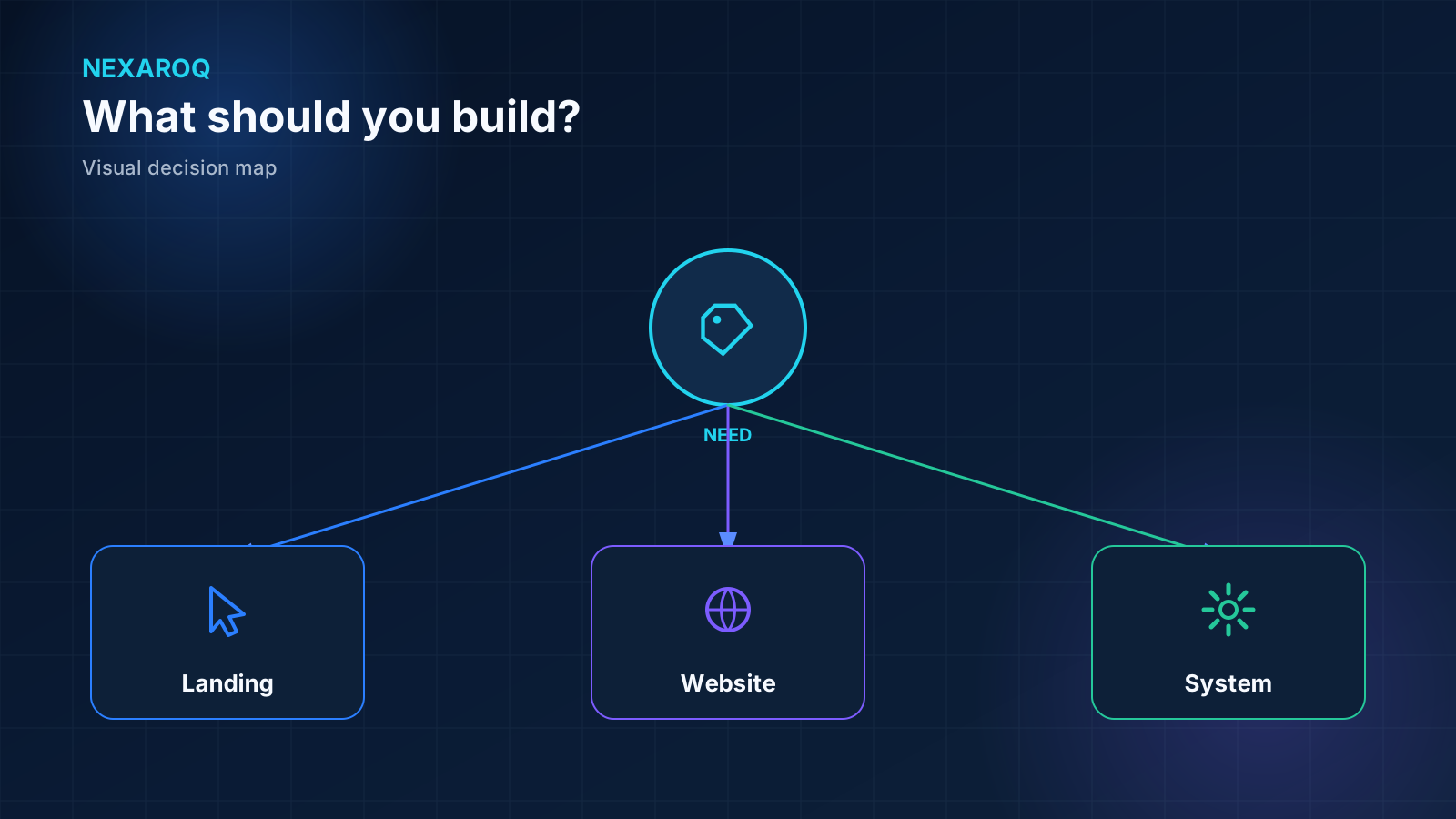
Before choosing a format, define what a visitor should understand or do next. They may need to request an assessment, learn about a service line, compare options, or decide whether the company fits their needs. That job is a better guide for the architecture than a visual preference.
When a landing page may be enough
A landing page is usually a reasonable fit when the proposition is bounded and the intended journey is short. Its value does not come from having less content. It comes from removing detours that do not support the primary action.
That does not mean reducing the page to a headline and a form. The page still needs to answer the questions a person must resolve before they can understand the offer, its boundaries, and the next step.
- There is one clearly defined offer, campaign, or primary action.
- The audience arrives with a relatively specific need.
- The required information fits into one coherent sequence.
- The team can maintain one consistent promise, CTA, and capture mechanism.
When a broader website may fit better
A multi-page website may be more appropriate when people need to move among services, solutions, projects, questions, or company information. Navigation stops being a distraction and becomes part of the task.
A website also creates a more flexible base for future resources, service lines, or pages aimed at different search intentions. That flexibility only matters if the organization can maintain it.
- The company offers several capabilities that need their own explanation.
- Different audiences arrive with different questions and journeys.
- Trust depends on showing context, process, and boundaries in greater depth.
- There is a realistic plan to expand or update content.
- Navigation helps people find information instead of competing with the primary objective.
More pages do not automatically create clarity
A large website without hierarchy can hide the information that matters. Every page needs a job, a clear relationship to the rest of the site, and a useful exit. If several pages repeat the same message, the architecture may be reflecting the organization chart rather than the audience's questions.
Content, trust, capture, and measurement
The format should support the amount of explanation the decision requires. A straightforward offer may need the problem, approach, scope, exclusions, common questions, and a CTA. A company with several service lines may also need service pages, methodology, projects, resources, and contact information.
Lead capture is not solved by adding a form. Decide what information is essential, who receives the request, how delivery is confirmed, and what happens next. The experience continues after the page ends.
Useful trust signals
Clear scope, ownership, process, and contact details are usually more useful than a screen filled with general claims. Publish only evidence the organization can support and keep current.
Measurement that matches the objective
Define basic events that show whether the journey works technically: viewing a relevant section, starting or submitting a form, selecting a contact channel, or reaching a confirmation. Measurement helps you observe the journey; it does not replace interpretation.
Two examples to compare
One service with one clear action
A business presenting a specific assessment to a defined audience may cover the journey with a landing page: problem context, what the assessment includes, who it is for, what information the person should share, and how the conversation continues.
A company with several service lines
A company addressing different needs may require a website. The home page provides orientation, each service explains its scope, and supporting pages answer questions about process, experience, and contact. Forcing everything into one landing page would make exploration and comparison harder.
A decision framework before you build
Answer these questions with the people who sell, serve customers, and maintain the digital presence. If several answers are still open, resolve them before defining screens.
- What is the primary action, and what must someone know before taking it?
- Is there one central offer or several lines with distinct needs?
- Does the audience need to explore, compare, or return to information?
- Which questions must be answered to provide context and trust?
- Which capture fields are necessary, and who will respond to the request?
- Which technical events should be measured from the beginning?
- Who can update copy, prices, policies, and contact details?
- Which content is necessary now, and which belongs in a later phase?
Plan the next stage without oversizing the first
A landing page can grow into a website when new offers, questions, or content paths appear. A website can also begin with a small set of well-resolved pages. The current architecture should not block the next reasonable change.
Account for the domain, performance, accessibility, analytics, ownership, and maintenance from the start. Choosing between a landing page and a website is a scope decision; keeping it useful is an operational decision.